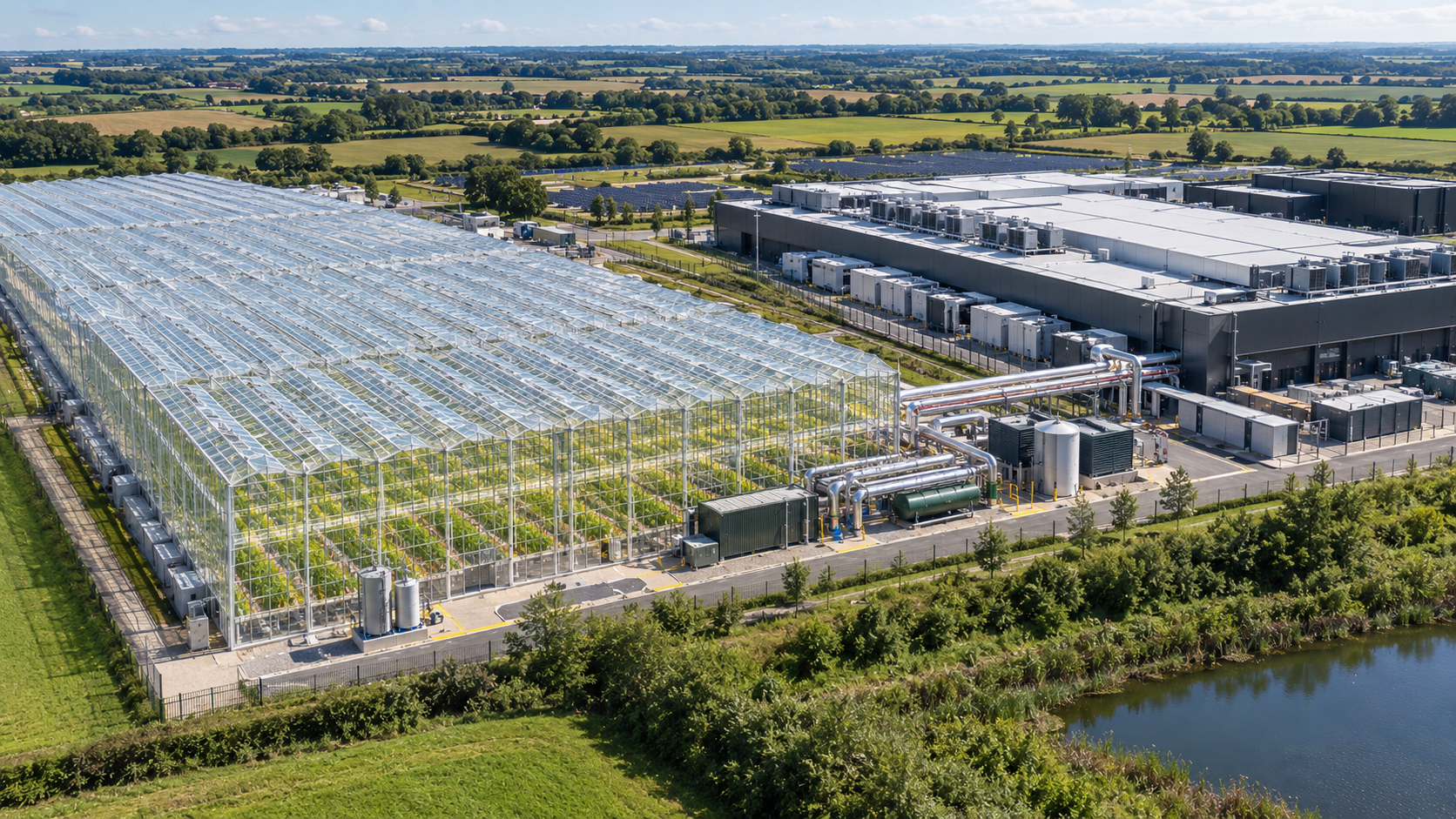
This image was created by AI!
The UK Government's recently published Data Centre Covenant sets out its ambition to support the growth of AI data centres across the country, while ensuring new developments deliver wider benefits to local communities and make better use of available resources.
https://www.gov.uk/government/publications/data-centre-covenant/the-data-centre-covenant
For the horticulture sector, one aspect stands out in particular: capturing / using the waste datacentres produce
AI data centres generate substantial quantities of heat as a by-product of their operations. Due to difficulties obtaining a connection to the electricity network some are installing natural gas fuelled engines which produce both high grade heat and CO2. Rather than allowing the heat and CO2 to be wasted, co-locating glasshouses alongside future data centre developments or vice-versa can convert what would otherwise be wasted into healthy, nutritious fresh produce.
Growers could benefit from lower heating costs, reduced exposure to gas price volatility and improved carbon performance. Data centre operators, meanwhile, would have an opportunity to demonstrate tangible sustainability benefits while supporting local food production and creating skilled jobs within their communities.
The Covenant also highlights the Government's intention to accelerate strategically important data centre projects, including potential measures to improve access to electricity connections. If delivered, this could help unlock sites capable of supporting both digital infrastructure and energy-intensive horticulture.
The UK's future AI infrastructure may do more than power data and innovation. With the right partnerships and planning, it could help create a new generation of highly efficient, low-carbon glasshouse developments, strengthening both food security and economic growth in the process.
If you are a datacentre developer you might be surprised by the amount of heat, even in the summer, that a greenhouse needs. A more straightforward solution to putting the heat to good use than burying heating mains along miles of public highways.